While I was busy harvesting Tomatoes and Corn and Kumara the bees were harvesting pollen to feed new bees and nectar for honey to keep them going through the winter. Continue reading “Plants for Bees in Late Summer and Autumn”

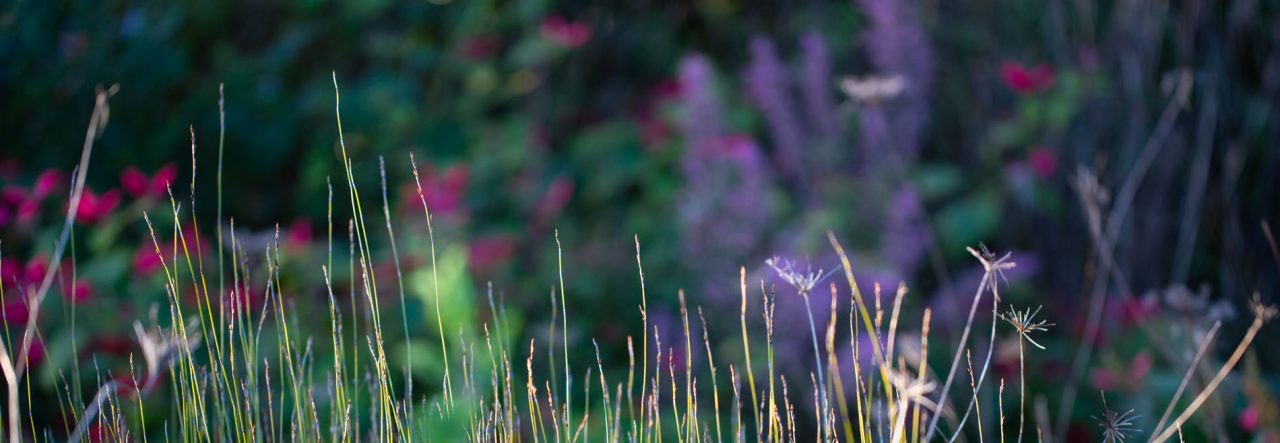
While I was busy harvesting Tomatoes and Corn and Kumara the bees were harvesting pollen to feed new bees and nectar for honey to keep them going through the winter. Continue reading “Plants for Bees in Late Summer and Autumn”

Work has kept me away from the garden and the blog over the last few weeks, and I’ve returned to a brutal storm with wind tearing branches away and the rain gauge showing around 4 inches of rain ( 120 mm ) most of which has probably fallen in the last week. I assume that the bees are hunkered down like I am inside. Continue reading “Flow Hive ready for Winter”

Artichokes, scarlet runner beans, pumpkin, zucchini, tomatillos and other vegetables, herbs, and flowers were full of bees in January.
Scarlet runner beans are so pretty and useful. This year I collected the mature beans to try as dried beans, since they get past it so quickly. The dried beans are very pretty, but I have yet to taste them.
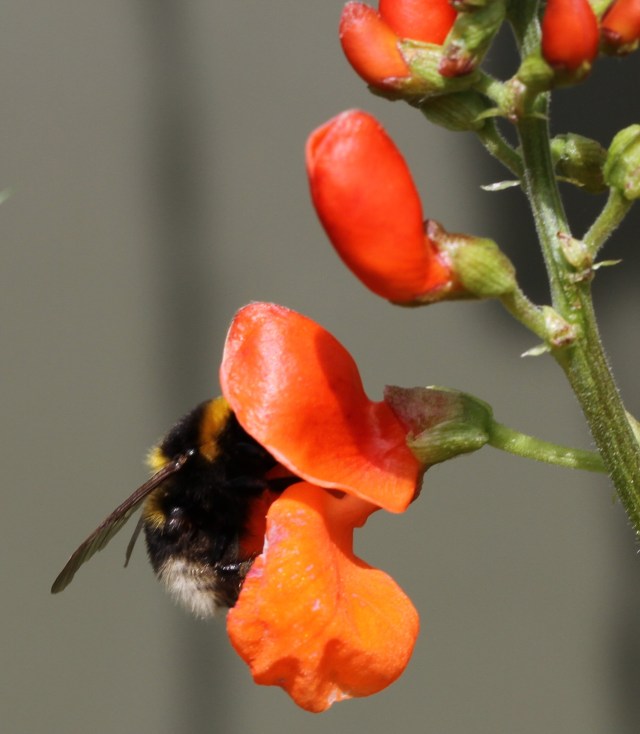 Oregano flowers are extra popular.


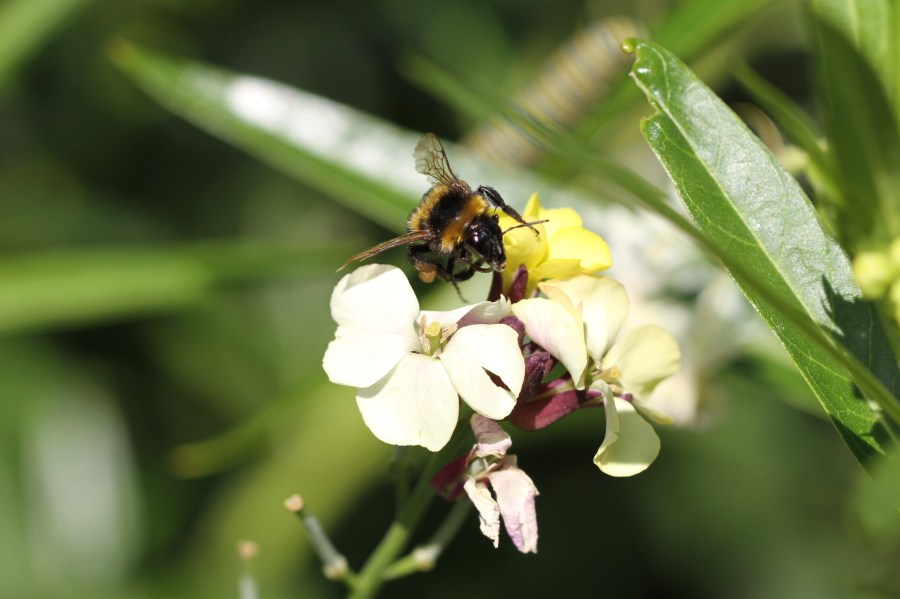
Each month I’ve tried to photograph the most popular flowers for bees and bumble bees. Summer was a blur of growing and harvesting which is slowing now so I can post some of them.
Soldier poppies, California poppies and some of the later perennial poppies continued into December and later and were often full of bumble bees which blended so well and buried themselves so deep they often looked like part of the flower.
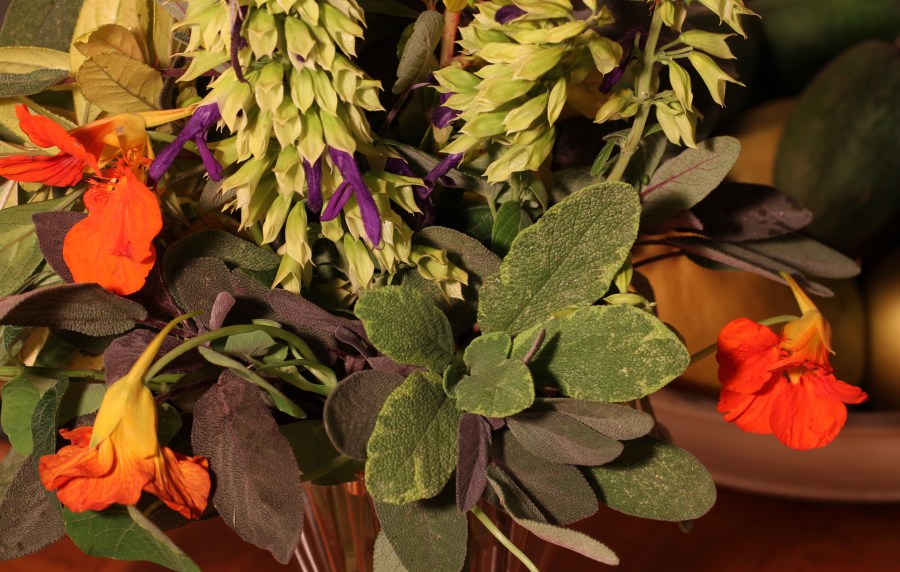
Salvias, Tithonias, and Dahlias are the stars of the Autumn garden. The bees love them, so I took only a few of the Salvia mexicana and mixed them with purple Salvia officinalis and variegated sage leaves. Continue reading “In a Vase on Monday – Salvia”
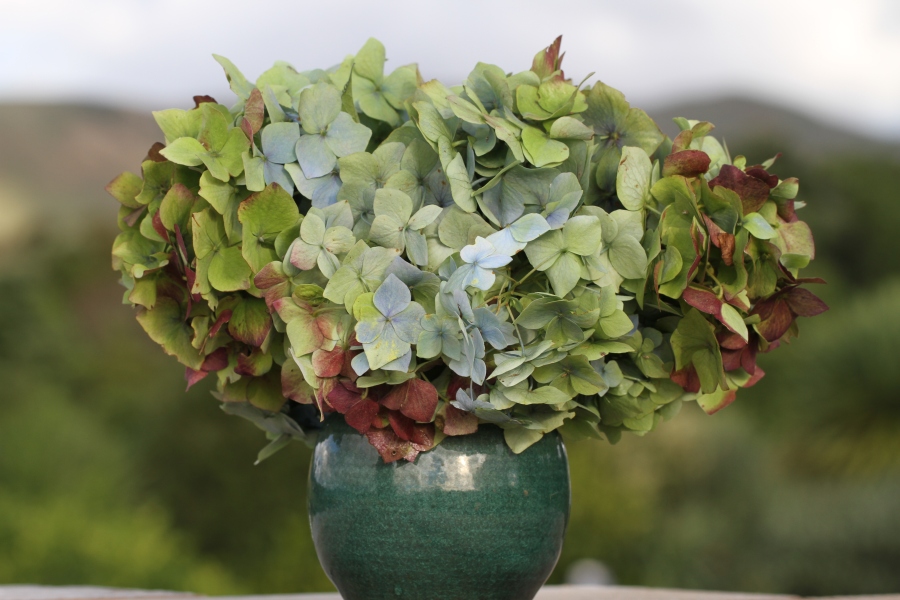
This is a very simple vase, and is again ‘found flowers’. They had to be cut as the hydrangea was smothering a small Nikau Palm, one which got eaten by cows last year around this time. And I don’t think these ones are attractive to bees. Having read that one bee hive visits about 225,000 flowers per day I am being careful to leave all I can for the bees.
Continue reading “Fading Hydrangeas on Daylight Savings Monday”

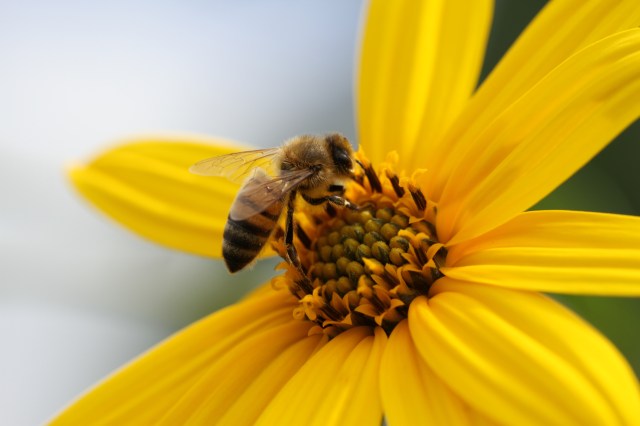
Well, first of all I have to admit to being wrong about bees and Jerusalem Artichokes. We had another storm and quite a few of the tall flowers were blown over, including one of the Cannas in my vase. With the Jerusalem Artichokes at a height I can see, and possibly now that they are more developed, they are attracting all sorts of creatures.

Including lots of bees.

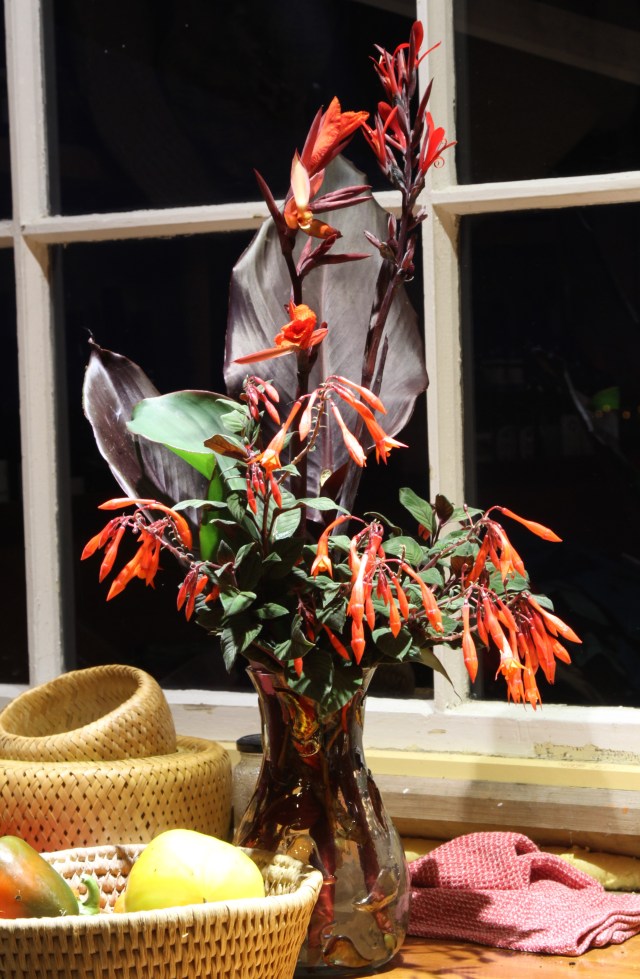
So, anyway, I’ve picked a fallen over Canna, ‘Australia’, which has dark purple leaves and a Canna Indica warszewiczii which has dark purple stems and green leaves, and some of the stalwart Fuschia ‘Gartenmeister Bonstedt’ which has been flowering since before Christmas. It has purple stems and the backs of the leaves are purple, although that’s not very evident in the photo. While I was taking the photo in the last of the light the neighbour’s cows came up to have a good look while eating their dinner, and a couple volunteered to be Easter cows. So then I got distracted by them and ran out of light entirely and had to come inside.
Thanks to Cathy at Rambling in the Garden who hosts this meme.
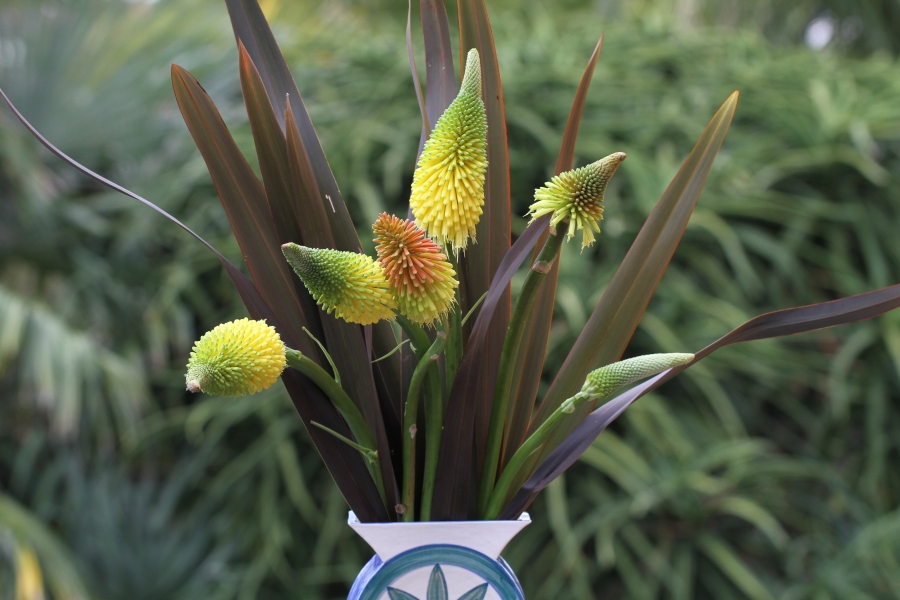
I love the citrus colours of Kniphofia, especially the tall yellow ones, but all of them really. The spiky leaves in the vase are New Zealand flax, a ‘black’ and a purple version of Phormium tenax. I picked them thinking that the purple would set off the yellow, but I see that the thin line of orange along the edge works with the orange as well.

Here it is, the Flow Hive. Much anticipated and even better than expected, complete with a plaque on the side saying ‘Founding Supporter’ and a matching hat. The hive has a whole different way of harvesting the honey, invented and improved over the last 10 years and launched with an Indigogo campaign last year.

Bumble Bees were going for pink in November, diving into the big fluffy ‘Fire Circle’ Poppies and the Foxglove ‘Strawberry Merton’ and disappearing, coming out of the foxgloves powdery with pollen.
Continue reading “Treats for Bees in Late Spring – November”

 Absent Gardener